Summer Driving Season, Reconsidered.

24_6_caddilac

We Need to Keep Fossil Fuels Buried in the Paleozoic Ground.

 Memorial Day Weekend, otherwise known as the start of the Summer Driving Season, commodity speculators and fossil fuel industry executives will be eager to see how prepared drivers will be to incinerate the oil and gas inventory currently flooding world markets – courtesy of, for the time being, Saudi Arabia and intensive US hydraulic fracturing. There is a way to boycott fossil fuels and signal to the oil industry we don’t need their stinking carbon nearly as much as they imagine. But first we have to be a little less obsessed with our cars, our machines and electronic devices say, once a week.


But First, Memorial Day Isn’t About Commerce.

 I remember the pained words watching a news interview of a father whose son was one of the first fatal casualties of the Iraq Invasion. Possibly it was the agony of his statement that explains the odd phrasing. He said his son gave his life for our American “lifestyle”. I believe he wanted to say American way of life. But maybe, lifestyle was what he meant. Under the circumstances it’s hard to find the words. Our lifestyle choices indeed ought to honor those fallen soldiers and align with the only words that ever seem to express the terrible loss;

 “…that we here highly resolve that these dead shall not have died in vain—that this nation, under God, shall have a new birth of freedom—and that government of the people, by the people, for the people, shall not perish from the earth.” — President Abraham Lincoln, 1863


 Idle the days not your car’s engine.

 While you’re immobilized in traffic this Memorial Day weekend, encountering the annual accursed madness of our era yet again, remember Albert Einstein’s aphorism that insanity is doing the same thing over and over again and expecting different results.

Assuming most of us are relatively sane it would be difficult not to know we’re idling away the climate simply to escape a maniacal lifestyle. The advisable thing to do when you do arrive at your destination is to just…stop. For the next 24 hours relax. You have just experienced an extreme example of an ancestral problem — not participating in a stop day.

Here’s an epiphany; altering the way you use time will reduce energy use and CO2 emissions. There actually is something you can enjoy doing about this.

This summer, ditch the car and rush-hour commutes. And when you return to the regular workweek, you might want to experiment with a Sabbath Day or Secular stop day — one day a week off the grid. It can free your mind and open all kinds of unimagined creative possibilities. (It takes a little practice).

James Lovelock, the freethinking inventor/atmospheric scientist/ecologist who developed the Gaia Theory of our planet as a self-regulating organism remarked;

“It’s personal action that counts. Any biological activation starts with a single organism.”

He also said this; “You can’t win people round by saying they are guilty for putting (carbon dioxide) in the air.”

Indeed, we overwhelmingly now know just how over our heads we’ve come and can start focusing on the inspired things to do about climate change.

There is on closer inspection an unhurried wilderness of biota, migrations, parks and waterways, in your regional surroundings to explore. From community gardening in Detroit to rewilding our children in nature or, as a trail maintainer working The Long Path told me “We do this so other people can have a better experience”. There are myriad other possibilities of your choosing.

And even if your have one of those clever engines that shut down when stopped, we have much better things to do with our time on Earth.
Think small (again).

24_6icons_VW

In semi-defense of advertising on Earth Day.

On his passing The New York Times wrote this headline;

Julian Koenig, Who Sold Americans on Beetles and Earth Day, Dies at 93.

To be the Guy who came up with Earth Day and Think Small is a remarkable legacy. At the time of seeing the first photos of our home planet in full, Joni Mitchell singing Woodstock, passage of civil rights legislation and The Wilderness Act, we had enough time then, to heed scientist’s major warnings of climate change and much to feel hopeful for.

Somehow along the way the virtue of sharing and simplicity became passé. But more recently, perhaps of necessity, a younger generation is discovering the practicality of less is more, as in a deeper connection to things they value.

Creative people like Julian and the other writers and art directors of the Mad Men era managed to make wit, the desired commodity.

I’d like to believe enough of us want to see our country and the world stop the climate catastrophe and that this crisis will awaken the necessary response. That wit, talent and simple honesty will reappear with sufficient force now that we need it most.

Advertising is a changed business as much as any other today in one very important way. Corporations no longer see their main purpose to serve the best interests of customers or country, at least in the main. And to be fair there are philanthropic aspects of commerce and market efficiencies are sought. But no surprise here – profits trump humanity. And that has no place in a quarterly earnings statement – the businessperson’s report card. The only reason to be green is if it makes money.

A t-shirt my daughter bought me during the Gap RED campaign reads;

 WHAT WE
COLLECTIVELY
CHOOSE 2 BUY,
OR NOT 2 BUY CAN
CHANGE THE
COUR$E
OF LIFE
& HISTORY
ON THIS
PLANET.

 Change buy to sell and It should hang in every corporate boardroom.

You might say social engineering has been what advertising has been up to all along unwittingly having arrived at this frightful moment. And though pundits rail at the suggestion of “mind-control” mankind is quite capable of creating a successful response to energy use. With cleverness, persuasion, improvisation, fury, love, faith, comedy, art, science, music and every motivational tool and a whole lot more than good intentions.

Industrial nations must confront their primary role in undertaking the planet’s sixth extinction and find ways to dramatically alter a consumptive civilization. Especially in light of the developing world’s emergence and expectations of a planet-wide consumer culture.

Since the Second World War there have been a great many PSA (Public Service Announcements). Advertisers leap at the opportunity to be authors of them.

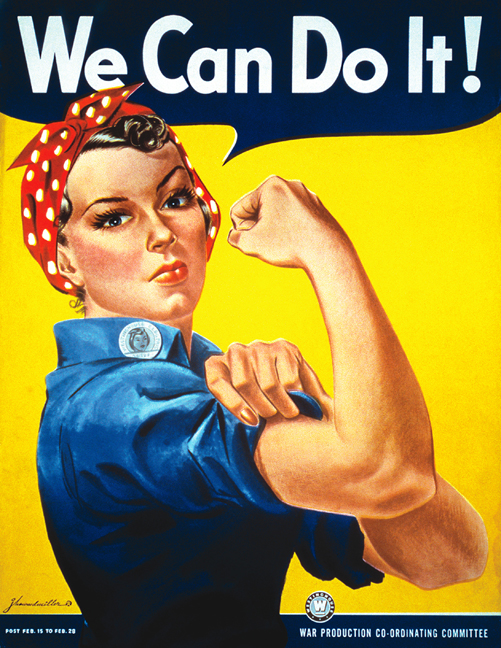
"We can do it!" Rosie the Riveter Poster smokey_poster Save a Planet


Classic campaigns from the Ad Council and one of mine for the Time Environmental Challenge.

climatenamechange.org

One of The Guardian top 10 climate change campaigns.

Where to begin?

“This is an absolute necessity for anybody today. You must have a room, or a certain hour or so a day, where you don’t know what was in the newspapers this morning, you don’t know who your friends are, you don’t know what you owe anybody, you don’t know what anybody owes you. This is a place where you can simply experience and bring forth what you are and what you might be. This is the place of creative incubation. At first you might find that nothing happens there. But if you have a sacred place and use it, something eventually will happen.”

— Joseph Campbell

The return of cheap oil. This time don’t waste it.

24_6icons_barrel

Courtesy Getty Images

Boycott!

The price of oil tumbles but the devastating human cost remains.

What an astonishing and unpredictable moment. Crude oil prices are tanking and the US, producing 70% more in the last six years, is on the cusp of becoming, in a few months, the world’s largest oil exporter – more than Saudi Arabia!

This is good for consumers and our economy – temporarily.

Instead of decades of the punishing OPEC cartel and petro-state extortion, America has a real chance to get its groove back.

Consumers can send a powerful signal and we will never have quite this opportunity again – to alter the fossil fuel path – definitively.

Fossil fuel divestment is a real part of this change. But OPEC won’t be happy and will be back.

Capitalists praise the power of disruption to foster innovation but prefer inertia and an energy-addicted consumer.

Now it’s up to all of us. The stewards of our future.

24-6 Boycott. One day a week off the grid.

We, consumers all, can send prices even lower, enough to signal multinational corporations and repressive petro-states, that there’s more profit in responsible leadership. And we’re serious.

Help Oil Giants become sustainable Energy Companies.

Support coal miners transitioning to new livelihoods.

Acknowledge oil workers with whistle-blower protection and safer work conditions.

Spend a little time with our families and friends.

Bundle up in sweaters building snowmen.

Marvel at an astonishing Universe under a cold clear sky.

A spectacular sustainable future awaits.

With Big Oil extinction.

When Cultures Collapse.

24_6icons_capitol

For the 350th anniversary of my town’s founding in 1661, I was asked to draw the ten items that the Sinoway (An Algonquian-speaking people of the Wappinger Federation) traded for their coastal lands. The concept of actually owning land was as foreign to Native-Americans as the concept of money.

This is a mural that graces a wall in our town’s library titled: The Purchase of Mamaroneck from the Siwanoys, 1661. It was painted with the auspices of the W.P.A. (Works Project Administration) in 1936 by Warren Chase Merritt d.1968.

This is a mural that graces a wall in our town’s library titled: The Purchase of Mamaroneck from the Siwanoys, 1661. It was painted with the auspices of the W.P.A. (Works Project Administration) in 1936 by Warren Chase Merritt d.1968.

Drawing the traded items gave me a few days to contemplate what we value when civilizations collapse. It was a nice detachment from time but rooted in place. (A couple of 24-6 days off the grid to just consider history and draw).

These are the trade items I drew.

2 Firelockes, 12 Bars of Lead, 20 Coats, 20 Hands of Powder, 15 Hatchets, 15 Hoes, 3 Kettles, 12 Shirts, 1- Pair of Stockings, 100 Fathom of Wampum

Items for the purchase of Mamaroneck in 1661; 2 Firelockes, 12 Bars of Lead, 20 Coats, 20 Hands of Powder, 15 Hatchets, 15 Hoes, 3 Kettles, 12 Shirts, 10 Pair of Stockings, 100 Fathom of Wampum

Wampum, “white man’s money”, had more to do with agreements and treaties than currency before European contact.

As you can see, when these descendents of a thousands year old culture dispersed, what refugees needed was just enough to get the hell out, find some safer place, move in with distant relatives — assimilation if possible or exodus.

Sound familiar?


The Apocalypse is Having a Real Moment.

With films, novels, journalists and Grammy award songs capitalizing on our angst The Apocalypse is having a resurgent moment. Even climate denial can make hay from our apocalyptic neuroses.

Exactly what you might expect to see today when society loses cohesion.

In an interview of Oren Lyons by Barry Lopez for Orion Magazine, Oren relates exactly what democratic leadership entails. He is a Faithkeeper of the Turtle Clan among the Onondaga people and sits on the Council of Chiefs of the Haudenosaunee Confederacy. He speaks to the inspiration his ancestors provided in forming our early American democracy – the one we still aspire to. It’s a matter of survival for a thriving culture.

America’s leadership goes beyond trade and power or a willingness to squander blood and treasure. It rests on the promise that we prize equality and freedom over exploitation and despoliation.

Surely with our wild streak of independence it’s naïve to think compromise will restore our faith in government or if we compromise enough it will lead to sustaining civilization. Our destiny demands a special accommodation for generations to follow.

The least we can do is be informed and to vote. Always vote.

In the end we only do as well as other people do, and we get the government we deserve.

— Steve Mitsch

Did the Peoples Climate March matter?

24_6protester

At the time did the various protests for racial equality, women’s suffrage, labor rights, anti-war, bring about change?

Yes — and not completely, immediately or globally.

Although all of these causes, while intolerably endured, even to this day – the marchers recognized a common cause, to take immediate action for a habitable earth.

To say, you had to be there, is more than a saying when the stakes are the demise of the only climate that nurtured Homo sapiens and we have ever known. You can’t just be a bystander.

But what immediate action?

How could it be that we demand political action, corporate leadership, human rights, a scientific certainty and a total remaking of the world’s energy infrastructure – immediately – but not change our own consumptive habits? (Not to discount that all this needs to happen).

climate_march_350.org15323462502_b5eabbb0d4_o

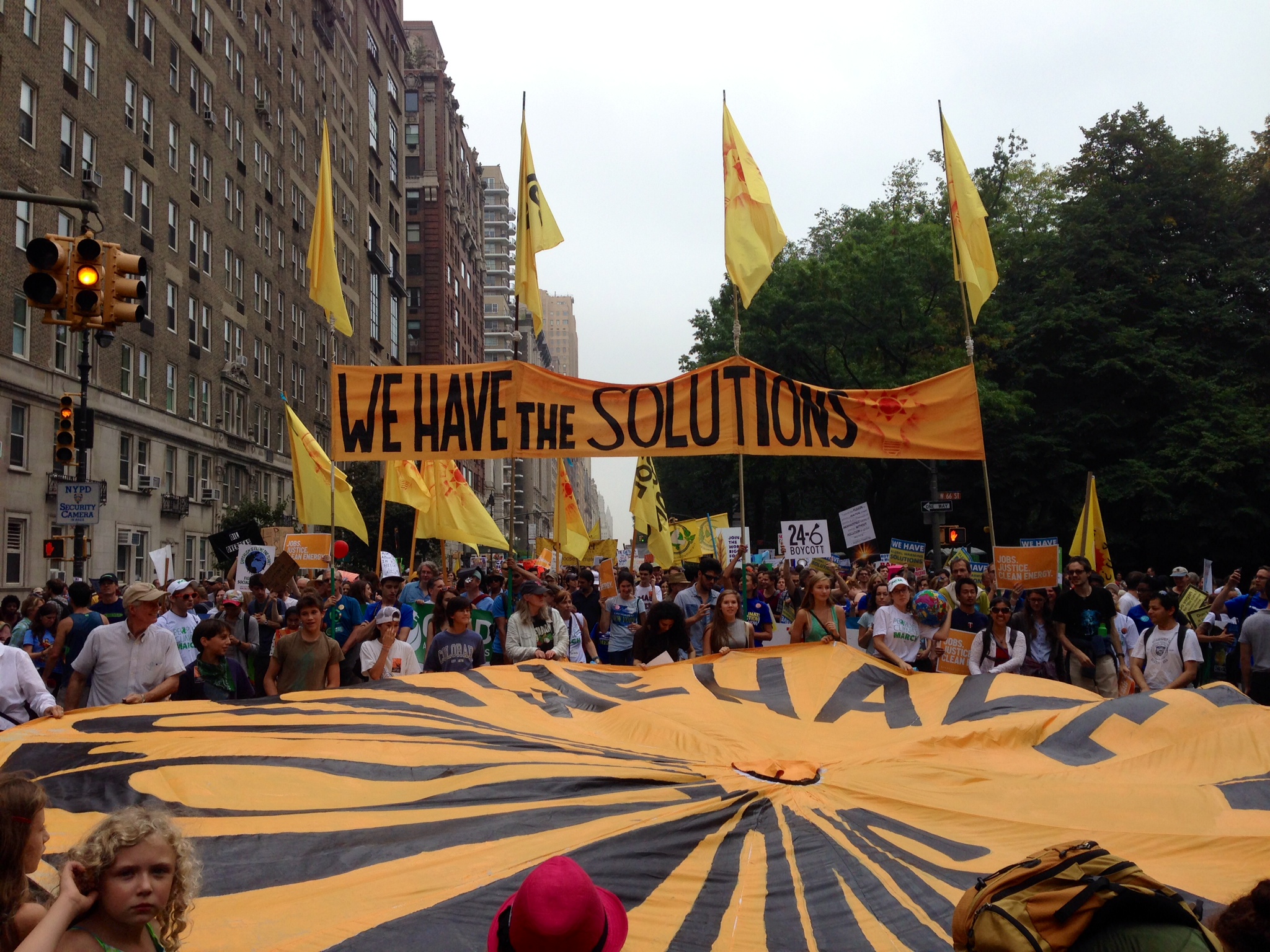
The miles-long march was divided into segments: People most effected, Building the future, Solutions, Who’s responsible, The debate’s over, To change everything we need everyone.

At the climate march I walked behind the large banner of “We Have The Solutions” with my 24-6 Boycott sign. Near me was the only group that suggested individuals do anything to use less energy – Vegetarians. One vocal woman handing out Go Vegan flyers, rightly, but a bit forcefully, proclaimed there is no better way for an individual to reduce atmospheric carbon than to not eat meat. (You had to love their enthusiasm). I goaded her a bit asking if it was ok to just do meatless Mondays. At first she resisted “No, no, no. You have to only eat plants!” But her friends consoled me with “That would be a good start.” and she encouraged that.

That is how 24-6 works. One day a week off the grid. Something we can do immediately to change energy consumption – right now.

It becomes a little through the looking glass epiphany to experience a different possibility. We can all do things – actual fun, joyful, simple, liberating things – this week – just for yourself without waiting for anyone to tell you what to do or wait for anyone else to make it happen.

Heading the opposite way when everyone was heading home I saw only one — one lanky young guy holding his solitary message scrawled on a torn piece of cardboard; “Consume Less”.

I think it was directed to us climate marchers.

Yes we are long past small, individual actions but the banner to wrap up the march stated; “To change everything it takes everyone. My carbon footprint for walking all day in this uber-passionate, carnival of a climate protest, was pretty much zero.

The enormity of the crisis is dispiriting but the possibilities seen in New York City that day were inspiring.

Steve Mitsch